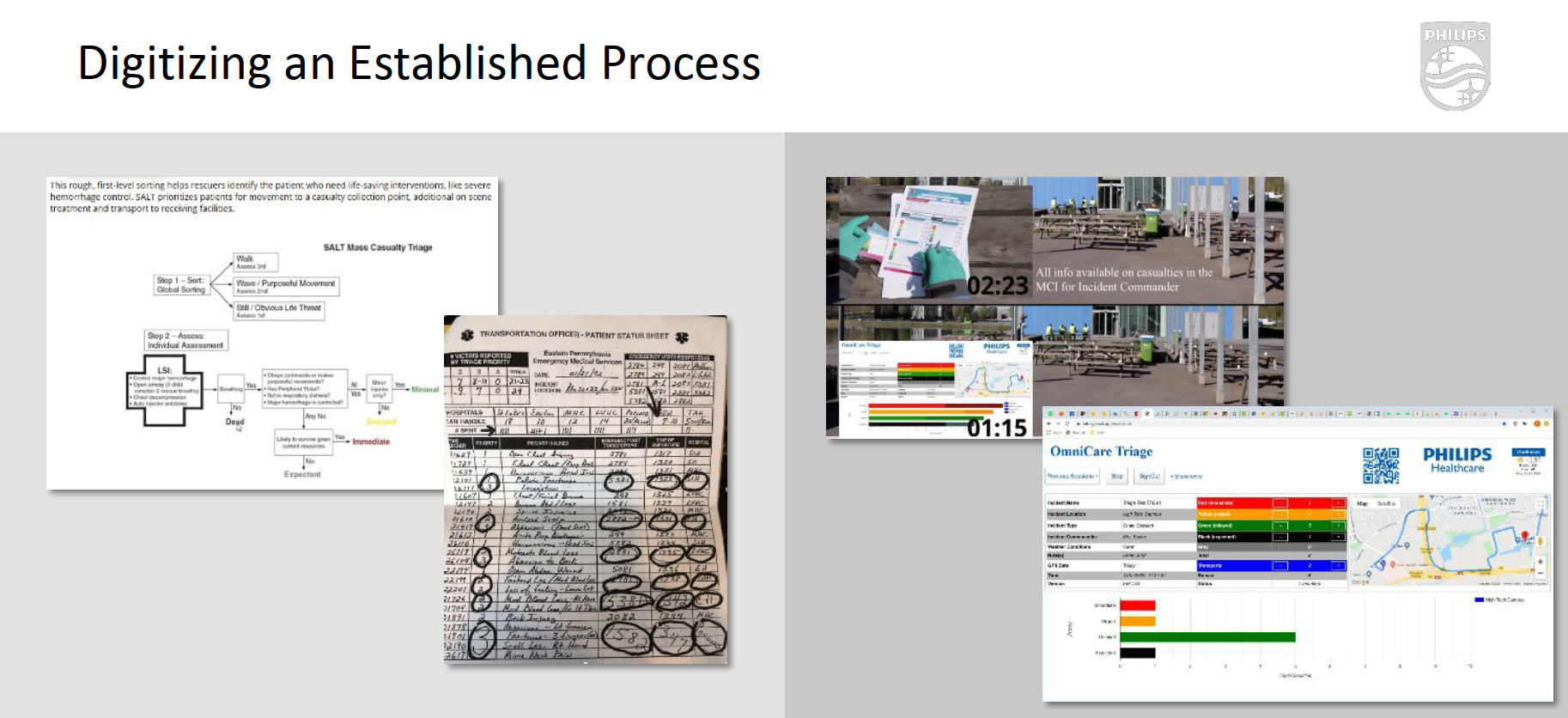
In late 2019 I attended an internal design seminar at Philips focused on emergency medicine innovation. One of the presenters was a firefighter and EMT named Joe Rock – and I was immediately impressed with his skill set, as well as his ability to make scary & complex scenarios accessible to everyone. It also turned out he served in the community next door to my childhood hometown, and as we got to know each other he realized I was uniquely suited to help him with his “passion project.”
Research & Discovery
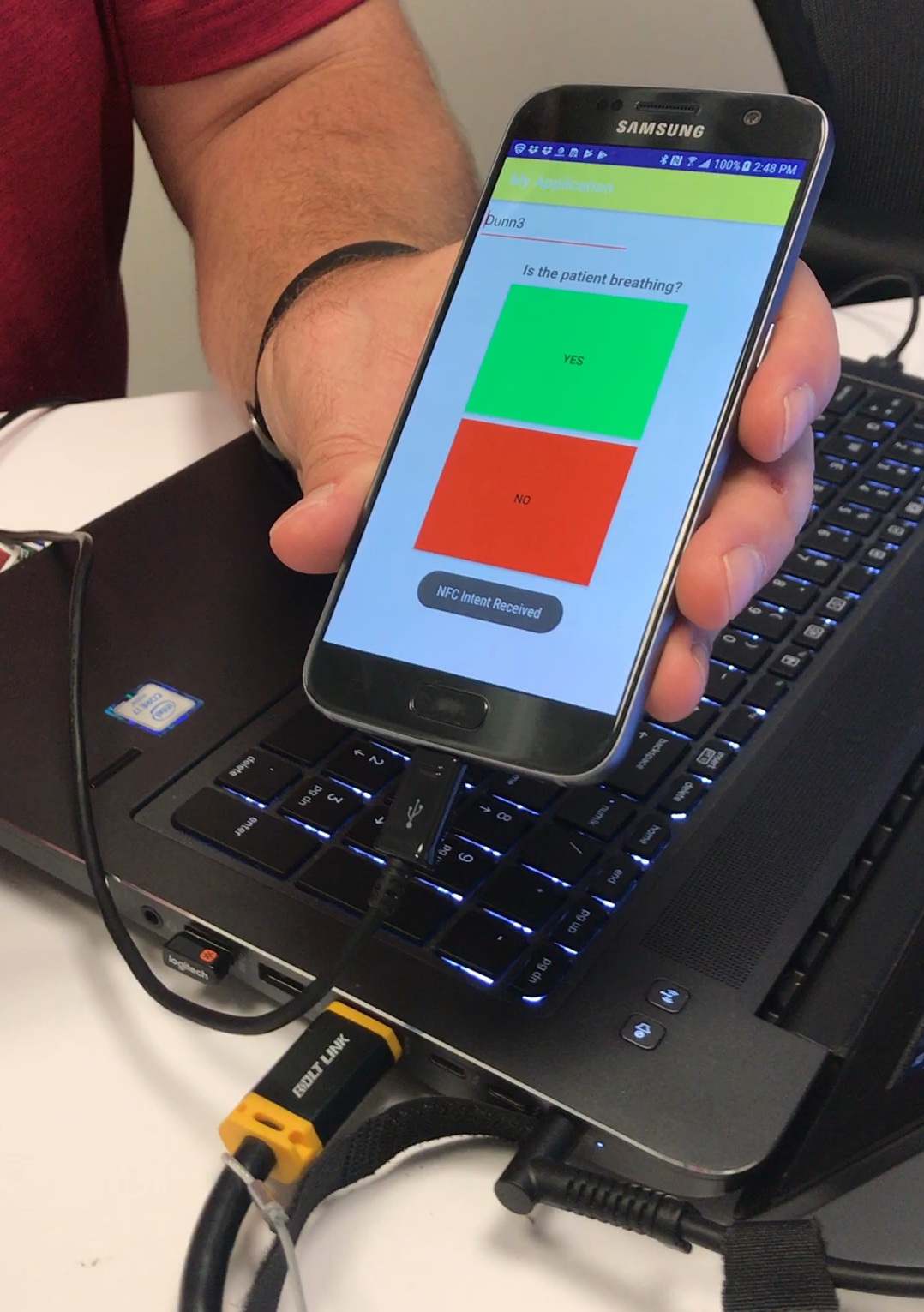
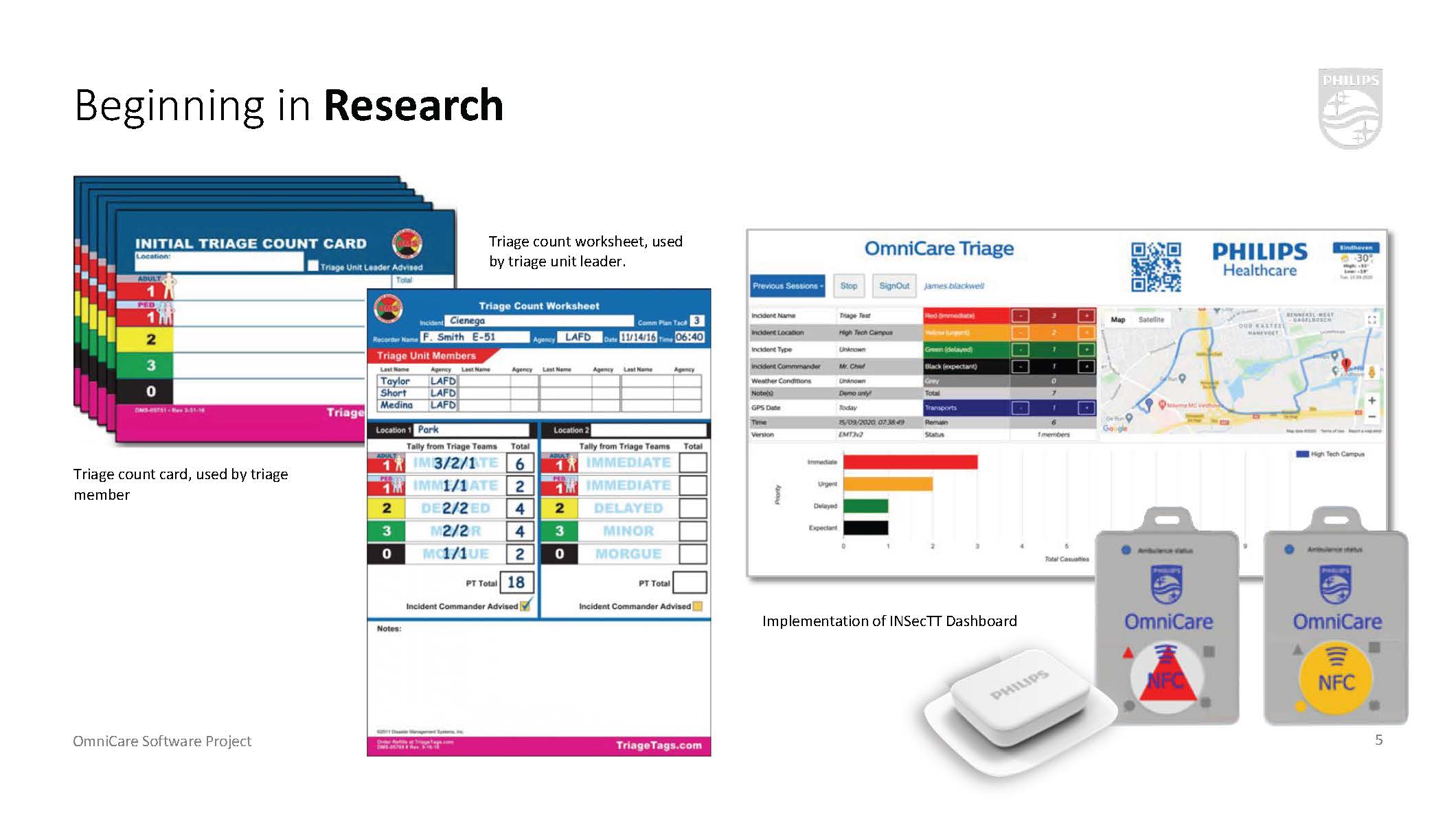
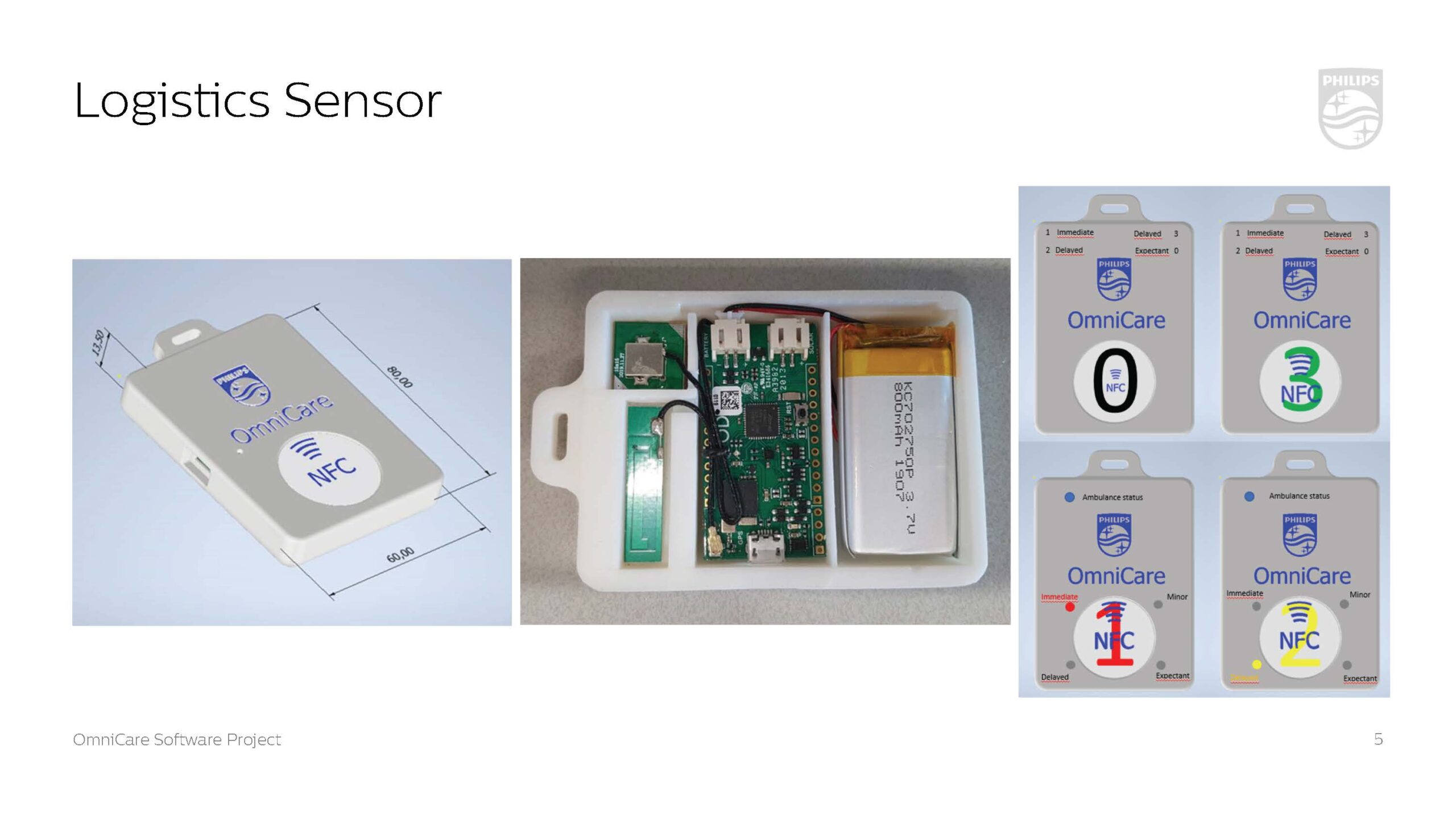
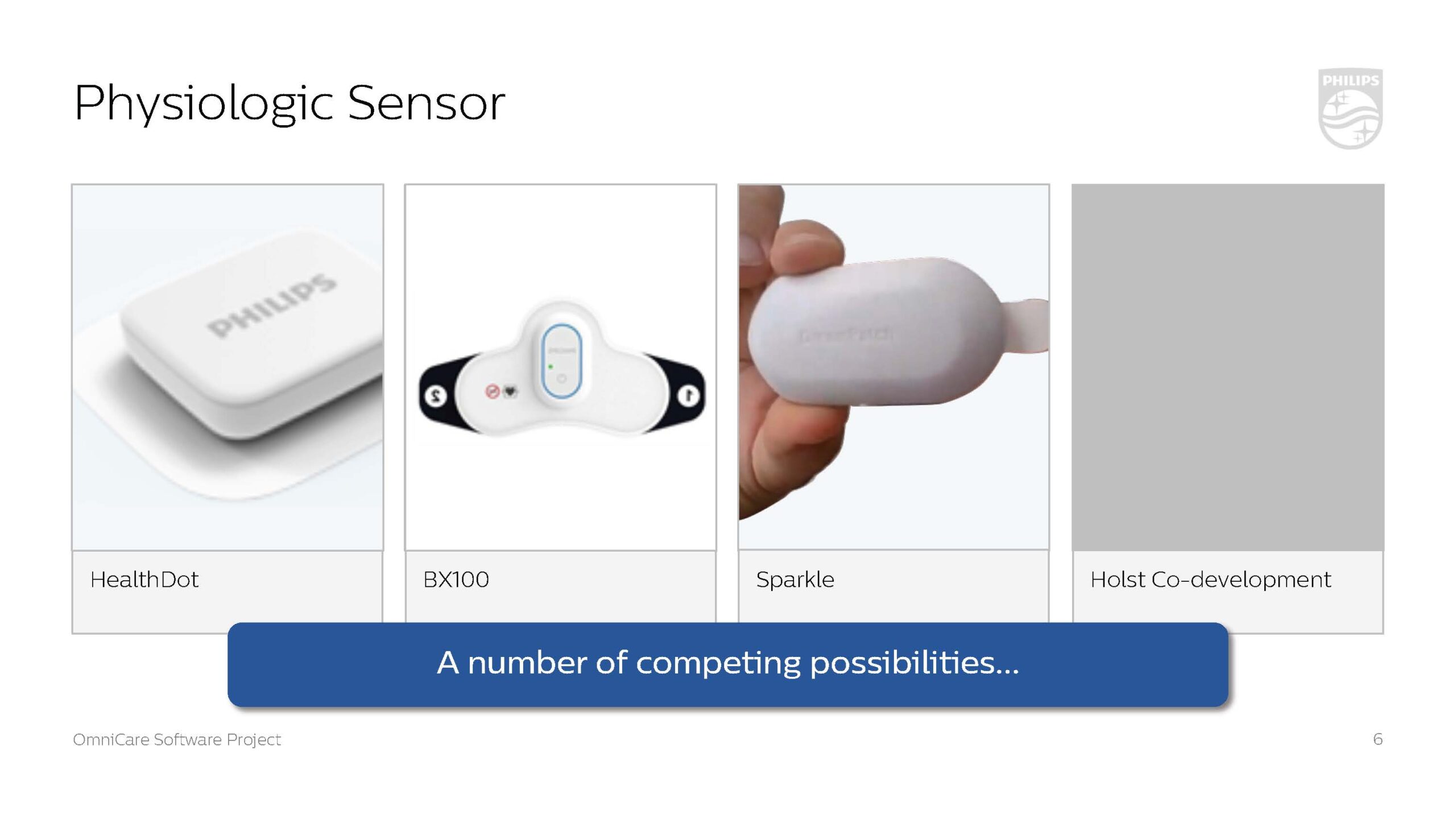
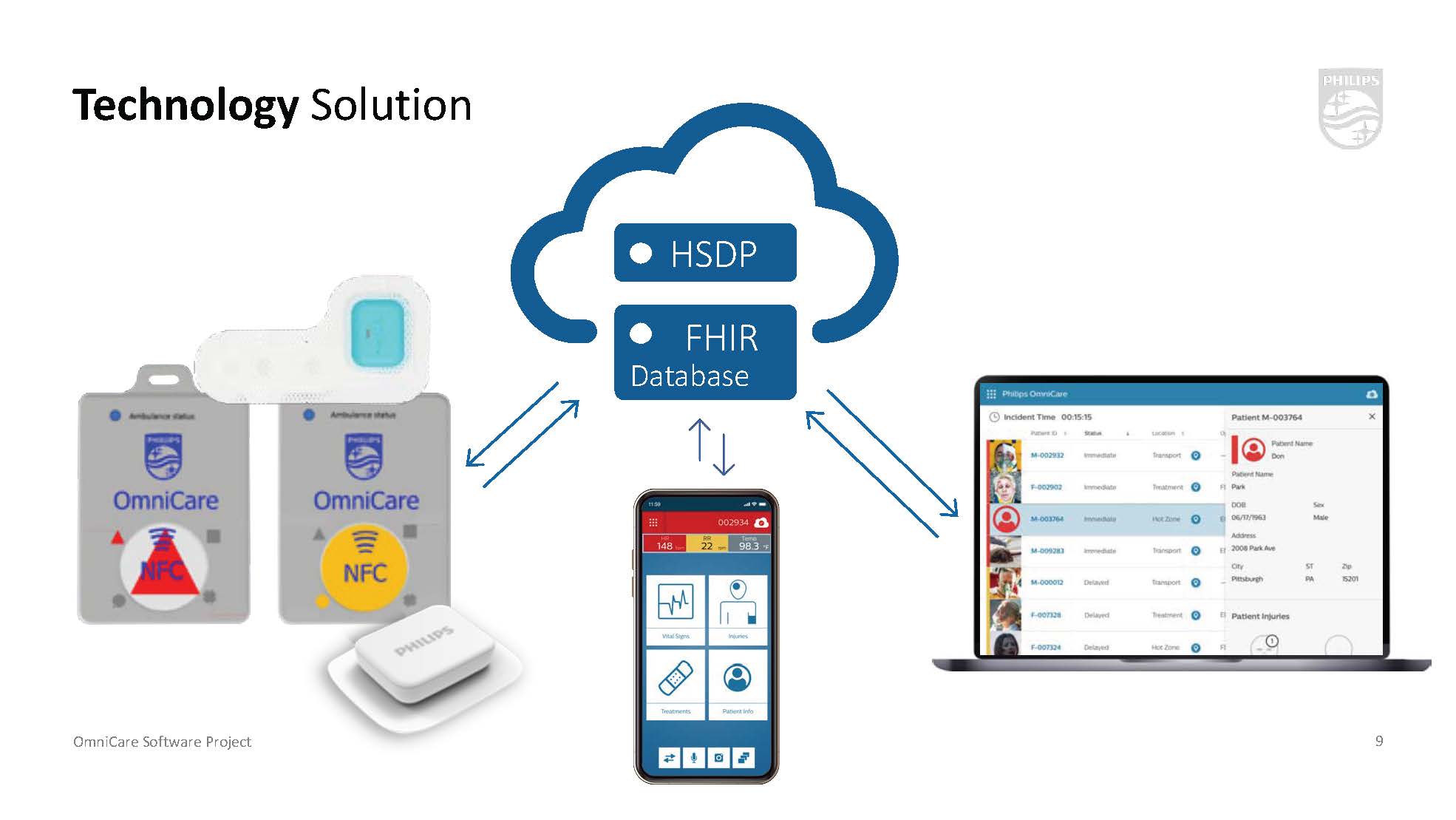
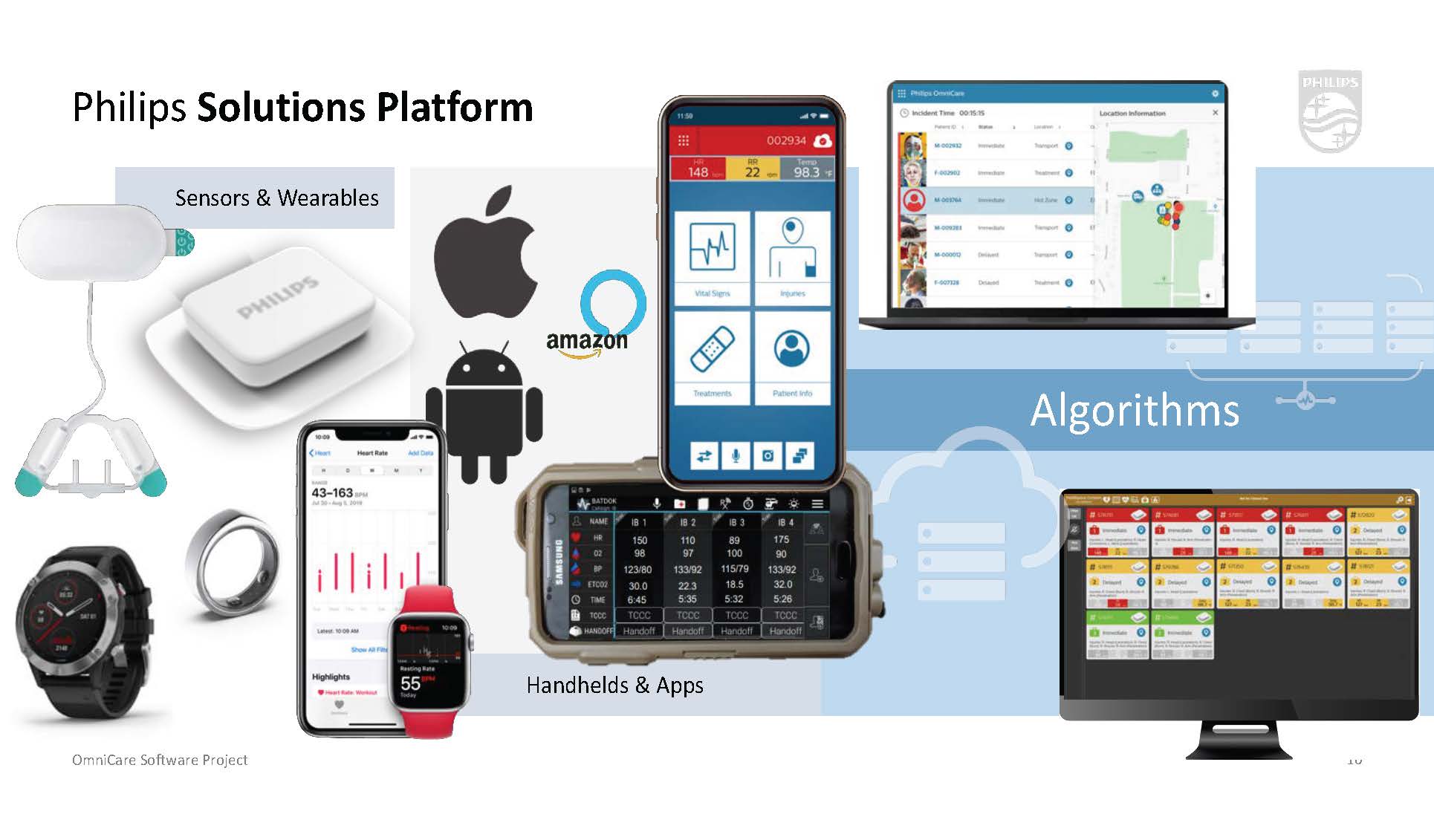
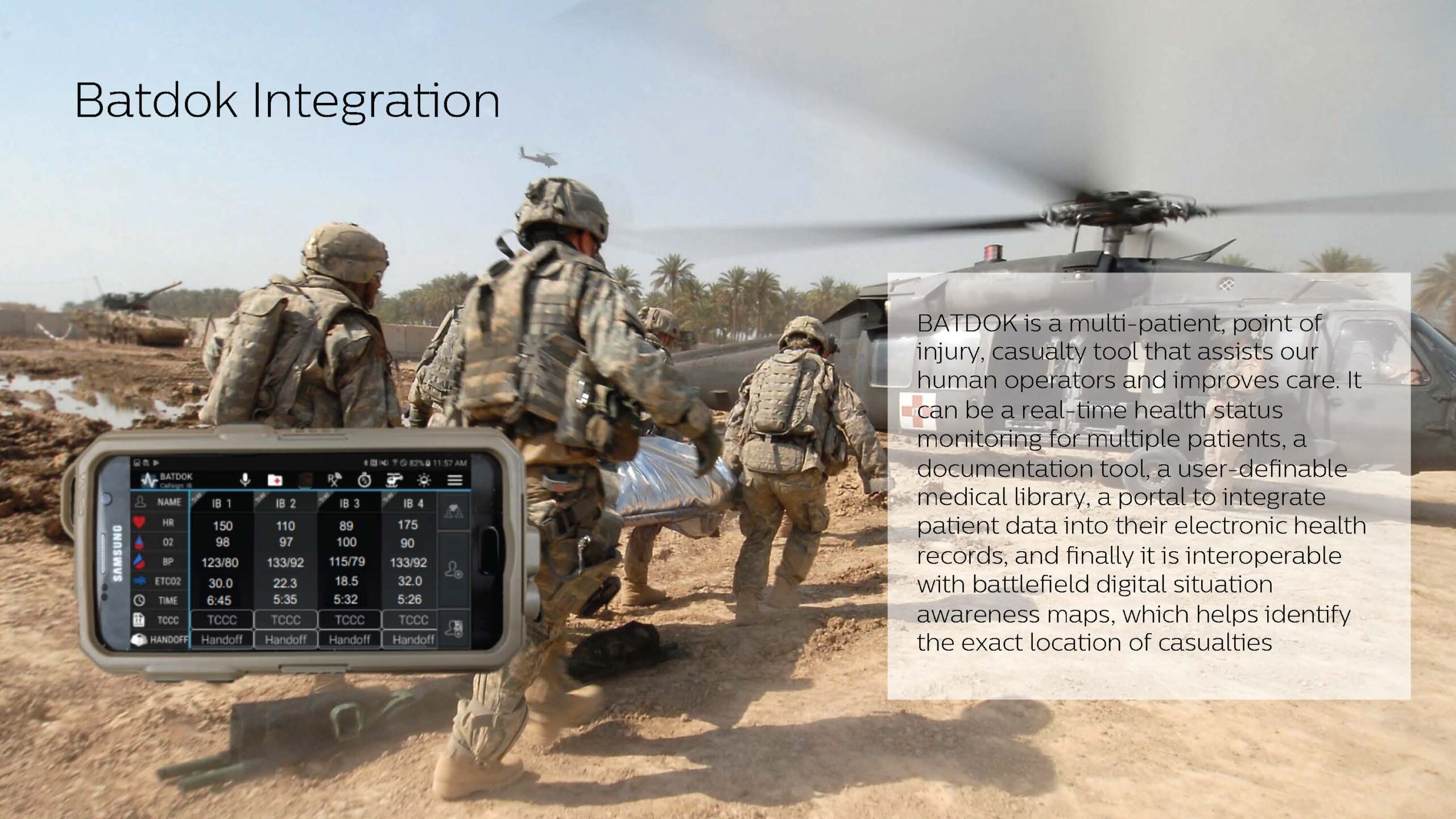
Joe had been “tinkering” with digitizing the triage process for Mass Casualty Events. His background was in medical devices – something which I had very little experience in, at the time. He had partnered with a number of research scientists from our Netherlands office in Eindhoven to build a device that could detect vitals, provide a GPS location and signal triage status all at once. He’d built a rudimentary Android app himself that would let him fill out the standard triage questionnaire, but now he needed to connect it to devices… and the cloud.
Design Work
Ideation & Concepting
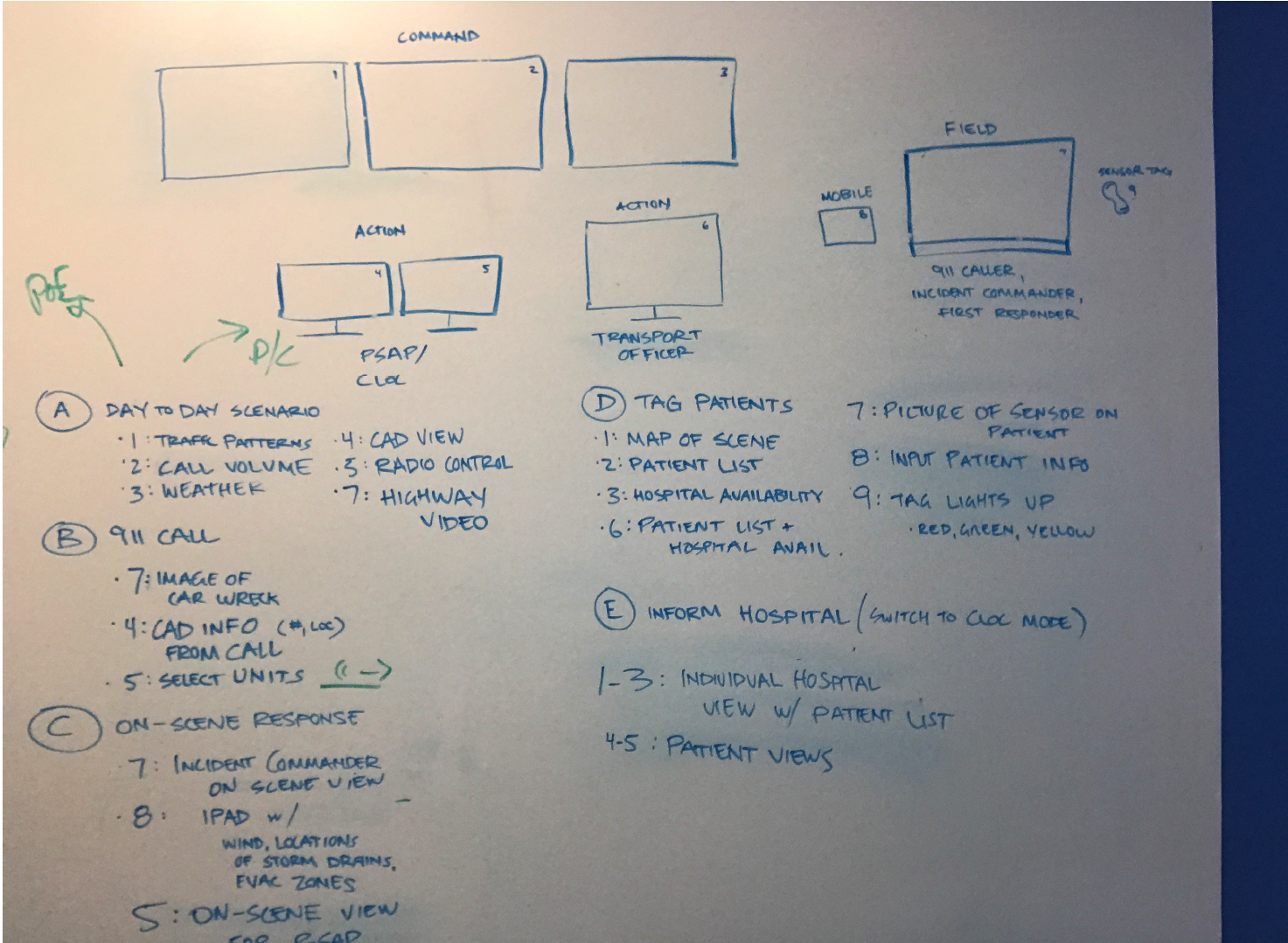
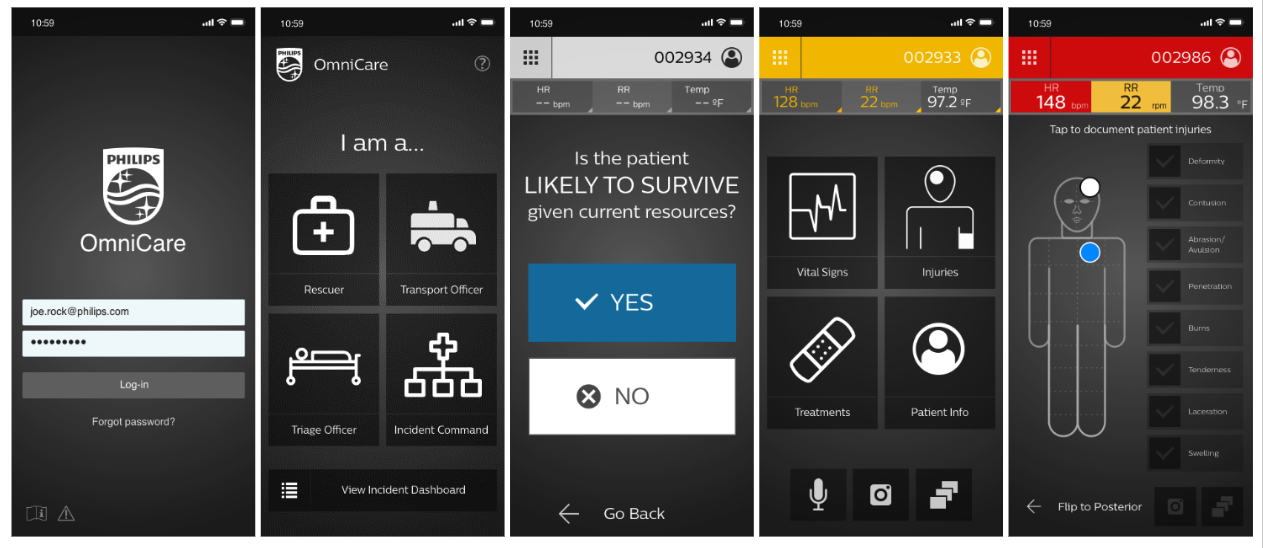
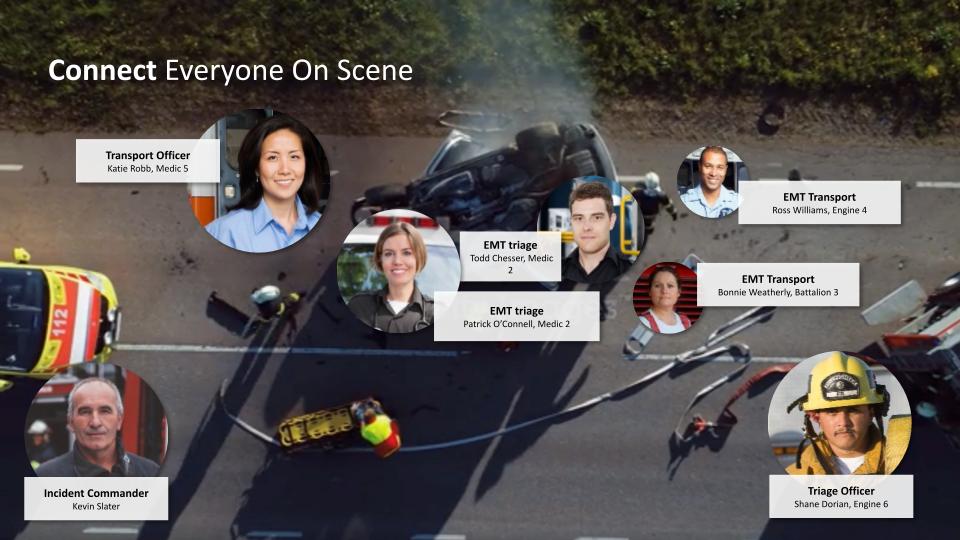
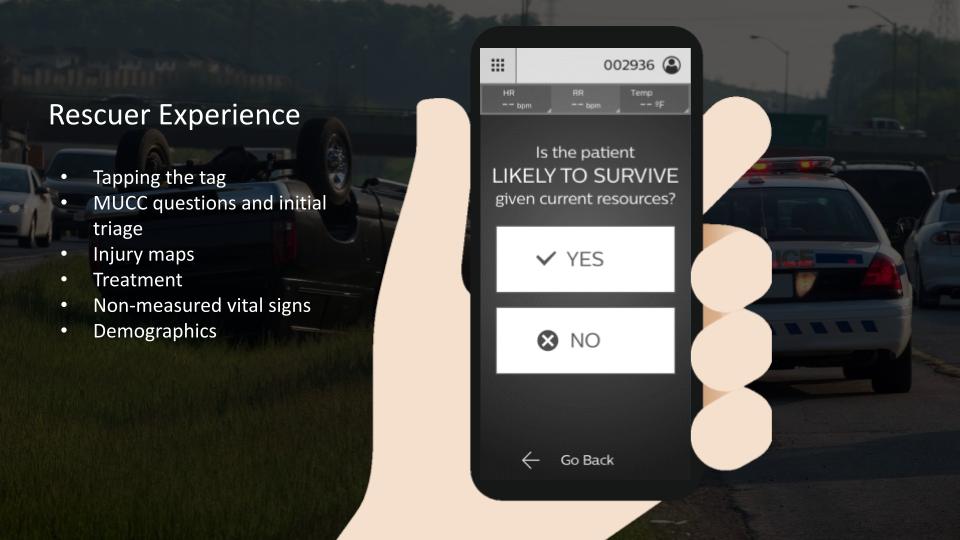
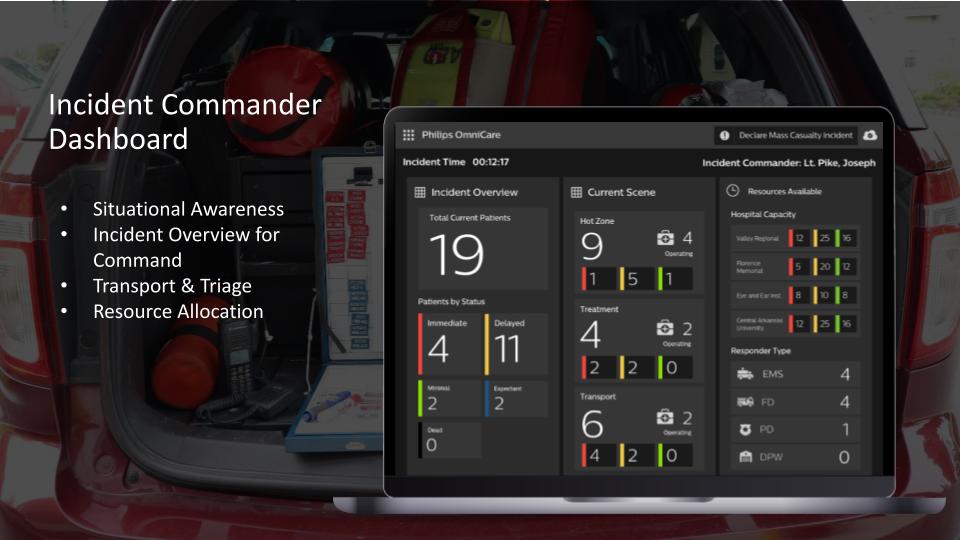
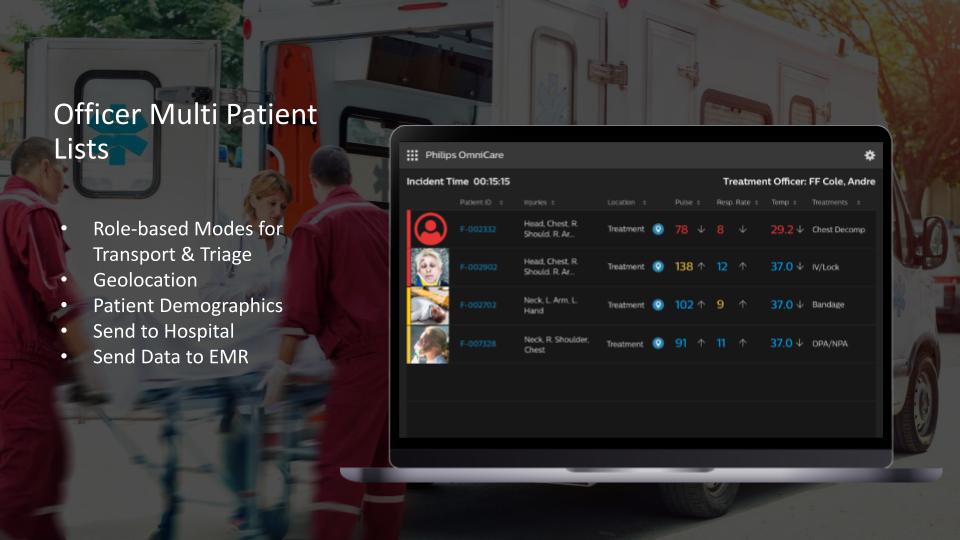
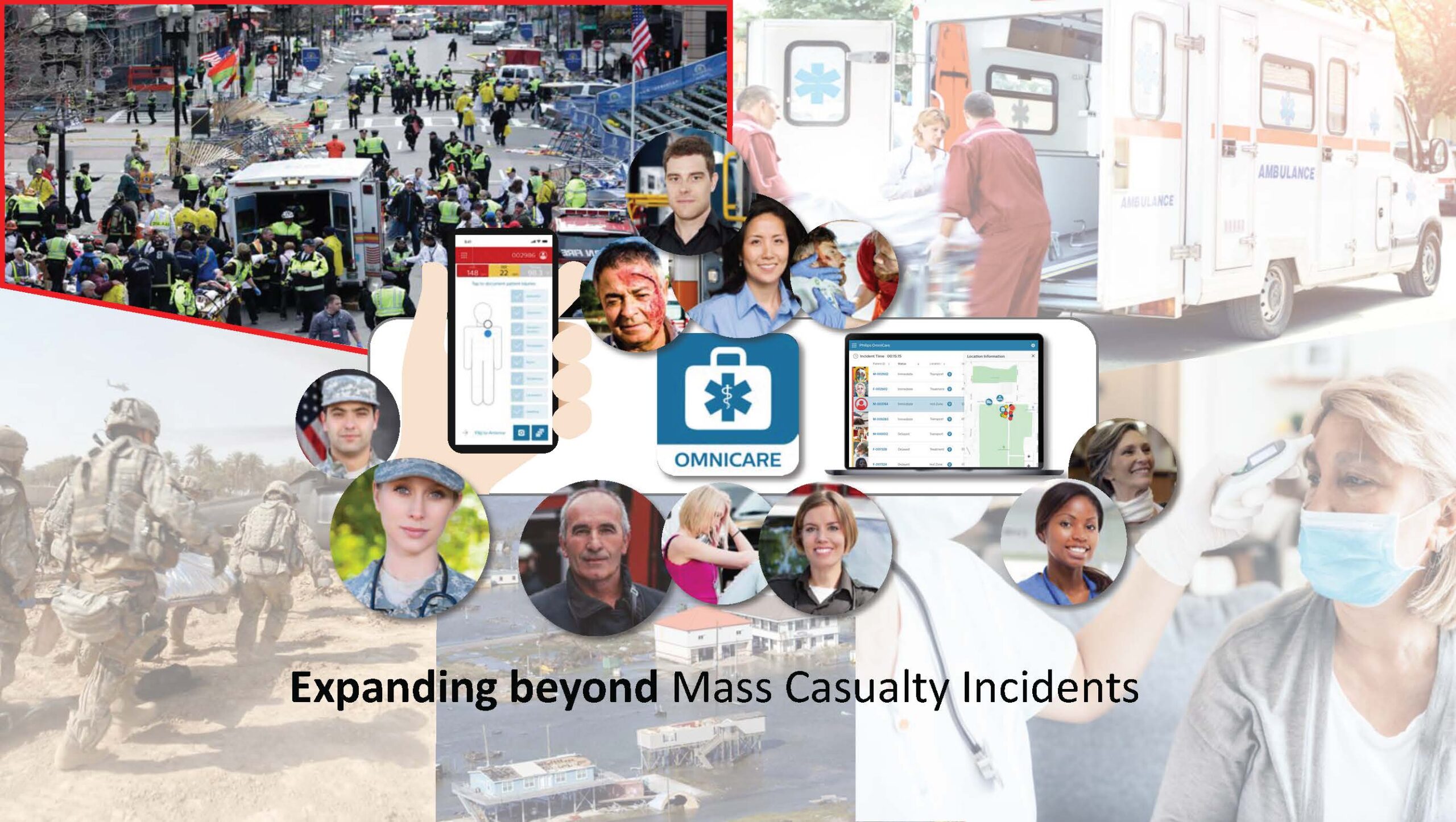
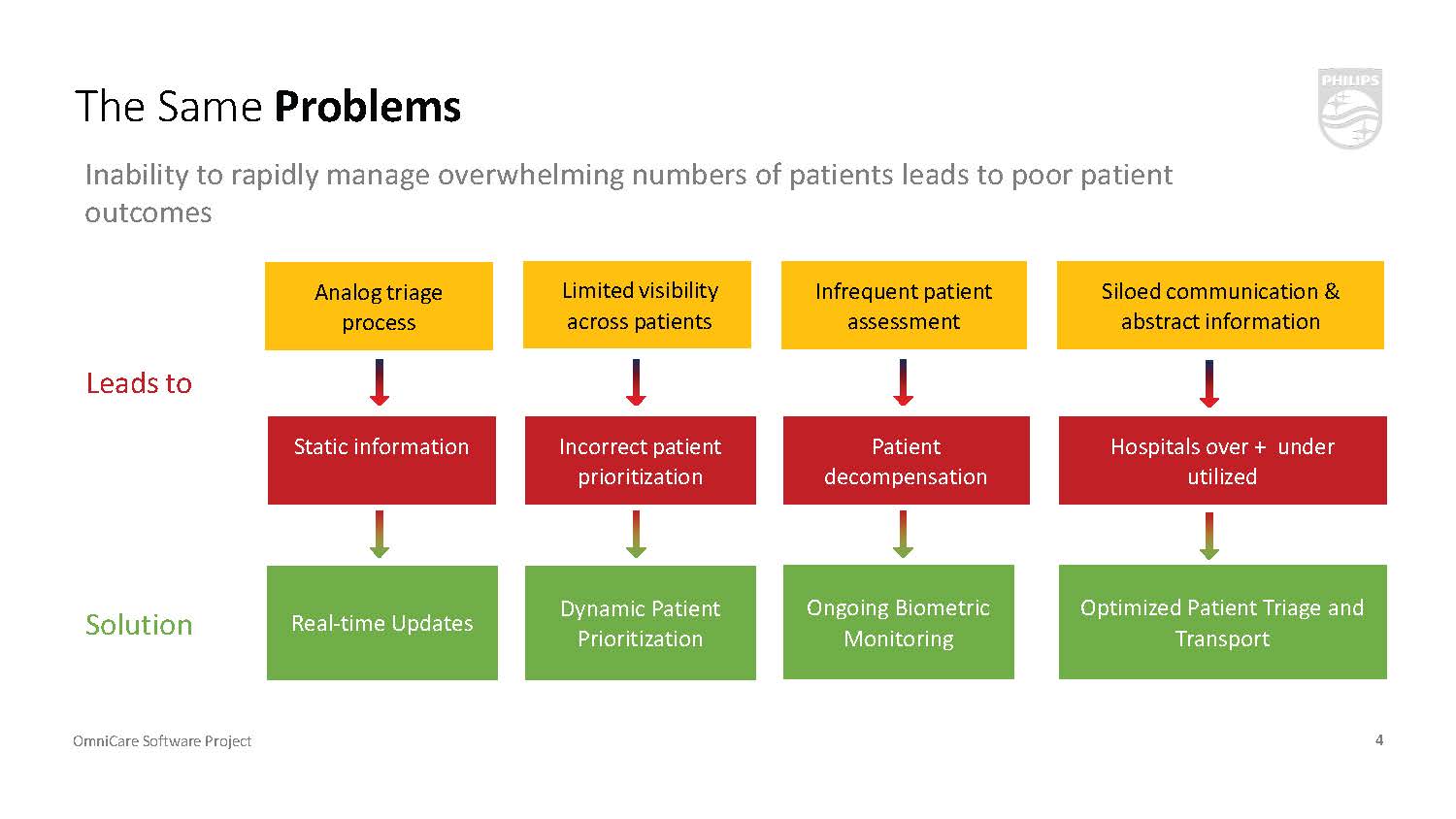
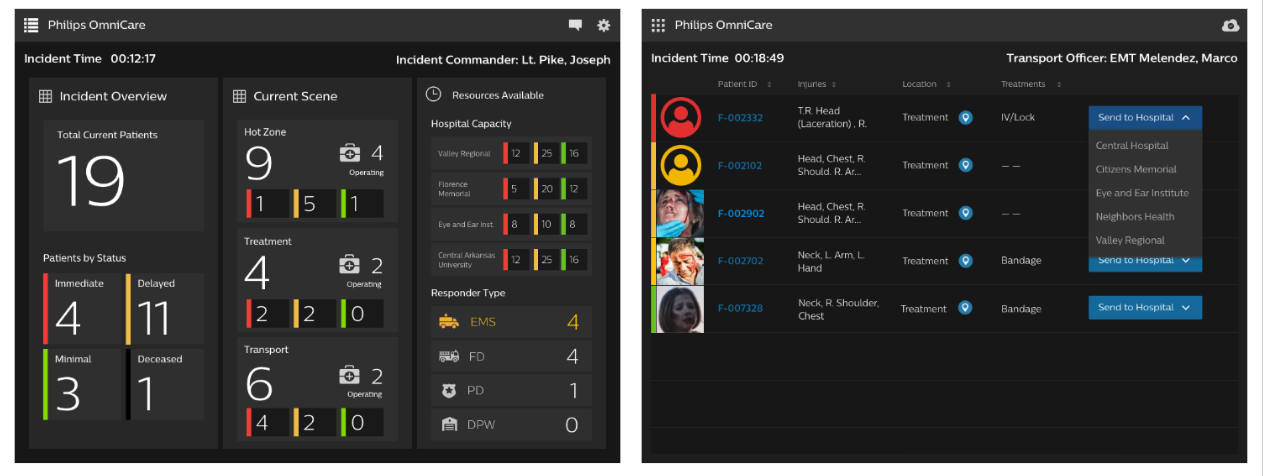
The team had made substantial progress with the devices, and asked me to design and build software that would enable a first responder to capture information, and allow command to monitor the status of patients on the scene. They also needed to tell the story of the product offering – we’d begun creating some proof-of-concept prototypes, but if we hoped to secure funding for our project we needed a compelling demo.
We collaborated through the spring and summer of 2020 in our spare time, begging favors from a few key colleagues, to design the solution and map out a demo. Joe served as our primary subject matter expert – as well as product manager. I designed the software and the creative collateral.
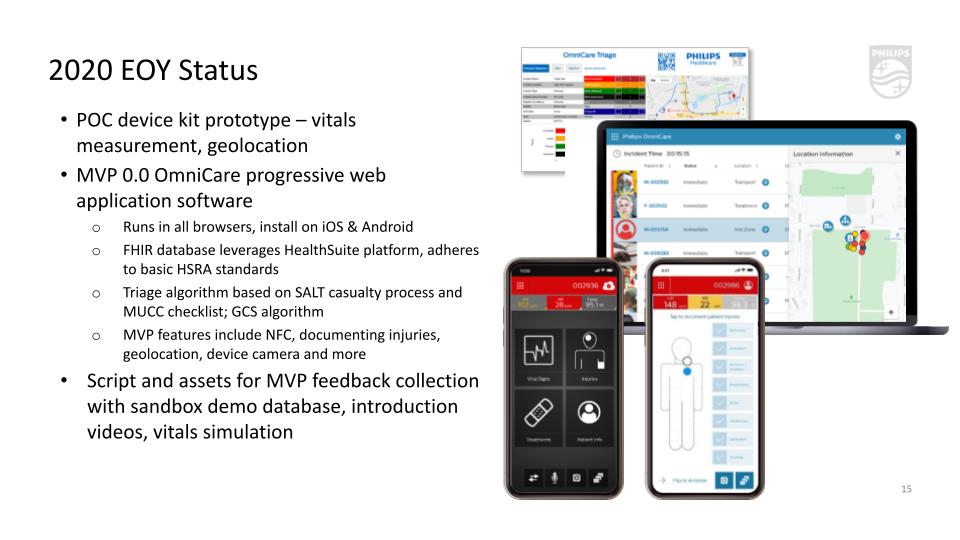
Our MVP solution had to be incredibly flexible. While the devices that would connect to patients would be medical devices – we wanted to keep costs low by enabling anyone with a mobile device to be able to install and use the app. We decided to create a progressive web app that could leverage device capabilities, while not being limited by specific devices or operating systems. This way I could create a design system that aligned with the Philips DLS aesthetically, but would render effectively across any browser or screen.
Project Vision Presentation
In September 2020 we demonstrated the solution for leadership and secured an additional $500K to turn the designs into functional software. We began collaborating with an architect and a team from our Bangalore development hub to deliver requirements and specs. Over the course of the next 2 quarters we delivered the MVP software and successfully received permission to integrate the solution into our advanced development demo for strategic partners.
The hardest part of leaving Philips was leaving this project behind. It has very real potential to save lives.